I'm doing a Social Science glossary because I'm a student at Ahuntsic college and I'm looking to be a psychologist in the future. Overall, this glossary will help people in my situation to understand more useful words for this program.
anxiety
noun
A feeling of worry, nervousness, or unease, typically about an imminent event or something with an uncertain outcome.
Example: (Gable, 1997) Similarly, many clinical staff are reluctant to deal with emotional issues such as, anxiety and depression because they feel they lack the skills to deal with them competently.
fr: anxiété
aphonia
noun
Loss of ability to speak through disease of or damage to the larynx or mouth.
Example: none
fr: aphonie
cognition
noun
Process by which an organism acquires awareness of events and objects in its environment.
Example: The cultural origins of human cognition.
fr: cognition
consultation
noun
Action to take notice.
Example: Services and responses need to be geared so that patients and their families experience positive health care encounters, and effective communication skills are needed to achieve a positive health consultation.
fr: consultation
emotion
noun
Affection, pleasure or pain, clearly pronounced.
Example: One explanation for the development of Schizophrenia is a highly charged emotional family environment, this is also known as high Expressed emotion (Brennan & Gamble 2000).
fr: émotion
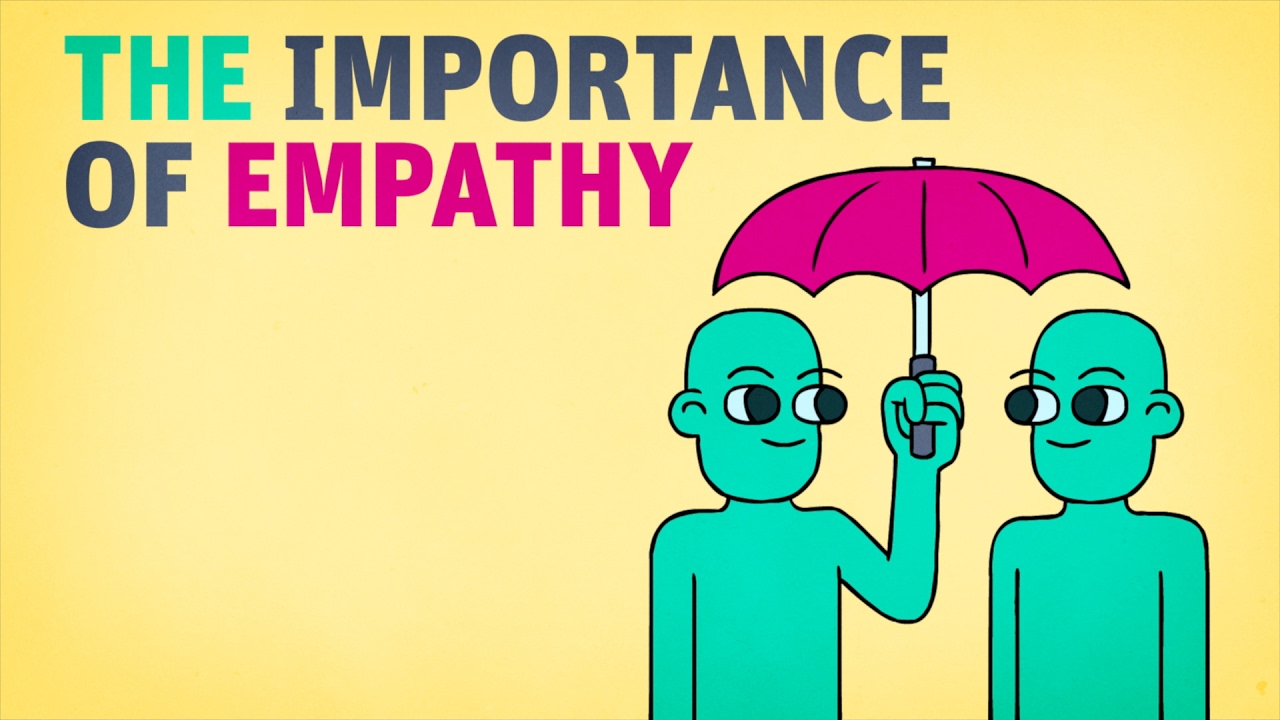
empathy
noun
The ability to understand and share the feelings of another.
Example: The child continued to play on the floor with the nurse and made a comment which I thought showed empathy and sensitivity; when she changed position he asked "are your legs tired?"
fr: empathie
ethnocentrism
noun
Evaluation of other cultures according to preconceptions originating in the standards and customs of one's own culture.
Example: The scale consisted of 30 items covering such issues as obedience & respect for authority, aggression towards deviant groups such as homosexuals, and general ethnocentrism.
fr: ethnocentrisme
memory
noun
The faculty by which the mind stores and remembers information.
Example: Memes according to Blackmore are things which can be imitated only, and she identifies things which are not memetic in their development, for example perceptual experience, memory, learning, exploration, food preferences, communication and social relations.
fr: Mémoire
mental
noun
Which is done in the mind only, without oral or written expression.
Example: Retrieved 11 02 04, from Case study - mental health nursing throughout adulthood British Academic Written English (BAWE) corpus The British Academic Written English (BAWE) corpus was developed at the Universities of Warwick, Reading and Oxford Brookes, under the directorship...
fr: mental
neurosis
noun
A relatively mild mental illness that is not caused by organic disease, involving symptoms of stress (depression, anxiety, obsessive behaviour, hypochondria) but not a radical loss of touch with reality.
Example: "Wolf-Man" as Pankejeff was later referred to in Freud's case studies, was diagnosed by Freud as having an anxiety neurosis, an animal phobia in early childhood, compulsive feelings complete with obsessive rituals, attacks of furious rage and neurotic sexual conduct.
Overall Freud described him as having "slipped beyond neurosis into a tangle of crippling symptoms" (Gay, 1989, p.285).
fr: névrose
observation
noun
Action to consider with sustained attention, in order to better know.
Example: Introspection is subjective and often written off as a scientific method of observation.
fr: observation
paranoia
noun
Character disorders (delirium of persecution, excessive pride, impossibility of not bringing everything to yourself) which can lead to mental illness (paranoid psychosis).
Example: These bizarre incidents resulted in mass witchcraft hysteria and paranoia as the adolescents accused numerous residents of the Salem of witchcraft and dealings with Satan.
fr: paranoïa
personality
noun
The combination of characteristics or qualities that form an individual's distinctive character.
Example: !Kung life, either in her experience or in her personality, and adds that her views were not shared by others (Shostak, 1990:350).
fr: personnalité
phobia
noun
An extreme or irrational fear of or aversion to something.
Example: "Wolf-Man" as Pankejeff was later referred to in Freud's case studies, was diagnosed by Freud as having an anxiety neurosis, an animal phobia in early childhood, compulsive feelings complete with obsessive rituals, attacks of furious rage and neurotic sexual conduct.
fr: phobie
phoneme
noun
Sound element of spoken language, considered a distinctive unit.
fr: phonème
placebo
noun
Substance without active principle but whose taking can have a beneficial psychological effect on the patient.
Example: Moreover, a pooled analysis of 399 patients receiving either a placebo or ezetimibe at 0.25, 1, 5, or 10 mg once daily showed a median percentage of LDL-C reduction of ~0%, 12.7%, 14.7%, 15.8%, and 19.4%, respectively (Sudhop and Bergmann 2002, Brucket et al 2003).
fr: placebo
psychosis
noun
A severe mental disorder in which thought and emotions are so impaired that contact is lost with external reality.
Example: Studies by anthropologists have found that in countries where individuals suffering from a psychosis are treated within the community by members of that community, rates of recovery are very favourable (Warner 1996).
fr: psychose
stress
noun
Situation of excessive nervous tension, traumatic for the individual.
Example: The last group, insecure-disorganised only include 2% of children with babies not being able to handle the stress of separation and exhibiting disorganised behaviour (as cited in E.E Smith et al.).
fr: stress
therapy
noun
Treatment intended to relieve or heal a disorder.
Example: After years of unproductive therapy Freud believed that the key to Wolf-Man's condition lay in a dream he had just before he was four.
fr: thérapie
withdrawal
noun
As the onset of symptoms, both physical and mental, when a substance is reduced or not given to the body. The substances we are talking about could be any chemical, but in psychology when discussing withdrawal you tend to deal with some kind of drug.
Example: This is obviously important for psychological development as there are three disorders noted in DSM IV (American Psychiatric Association, 1995) regarding withdrawal such as "Shyness Disorder", "Adjustment Disorder" and "Introverted Disorder", therefore being withdrawn obviously has psychological disadvantages.











:format(webp)/cdn.vox-cdn.com/uploads/chorus_image/image/55606685/PLACEBO_LEAD.0.jpg)



:max_bytes(150000):strip_icc():format(webp)/withdrawal08-569fe6da3df78cafda9f0050.jpg)